
Weight plates for bars with 30 mm and 50 mm sleeves
Weight plates let you adjust the load on a barbell or a compatible plate-loaded dumbbell bar. Choose standard plates with 30 mm holes, Olympic plates and bumper plates with 50 mm holes, or complete barbell sets for home and professional use.





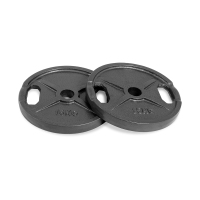
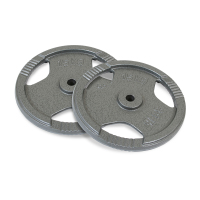
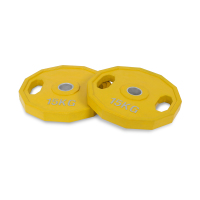
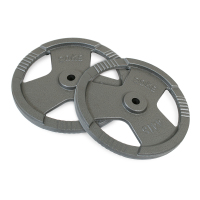


Which weight plates do you need?
Start with the diameter of the bar’s loading sleeves, rather than its grip. Our standard 30 mm plates fit compatible 30 mm sleeves; Olympic plates with 50 mm holes fit compatible 50 mm sleeves. The systems are not interchangeable. Check the diameter before ordering, as not every bar described as standard uses the same size.
Standard weight plates with 30 mm holes
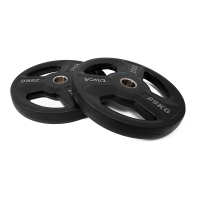
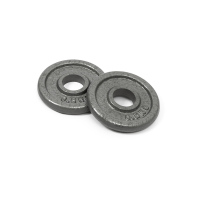
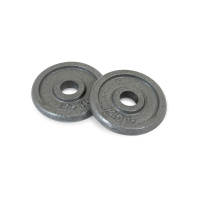
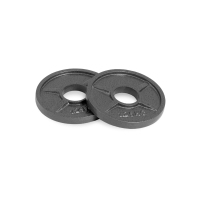
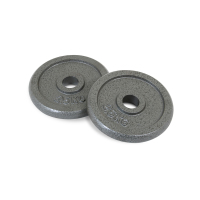
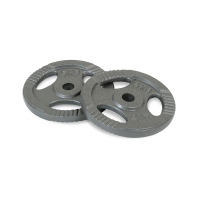
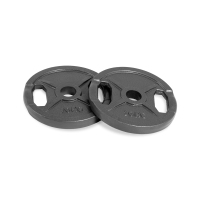
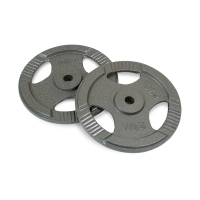
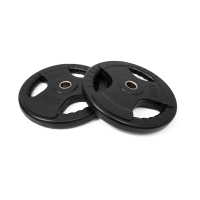
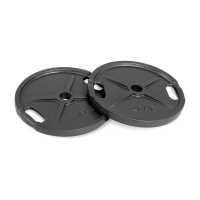
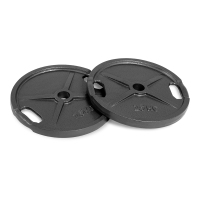
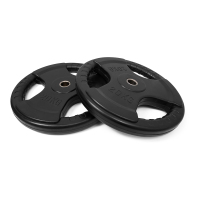
Standard weight plates with 30 mm holes are intended for barbells and dumbbell bars with 30 mm loading sleeves. Popular for home strength training, they are available in cast iron and rubber-coated versions. Combining different weights allows gradual increases in training load.
Olympic weight plates with 50 mm holes
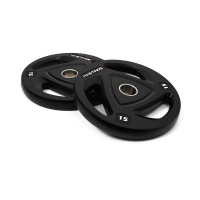
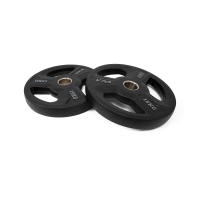
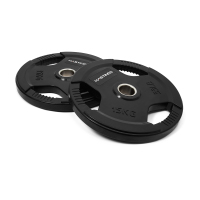
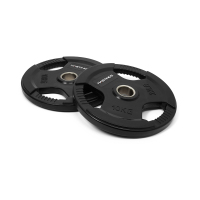
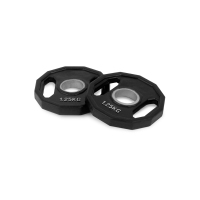
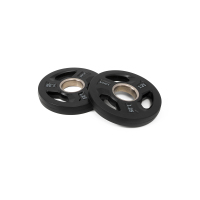
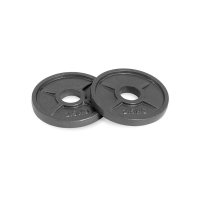
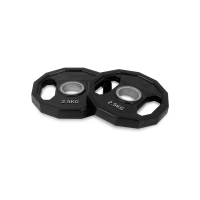
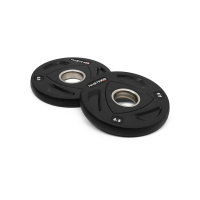
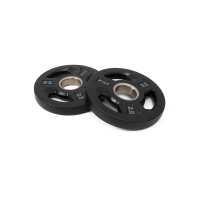
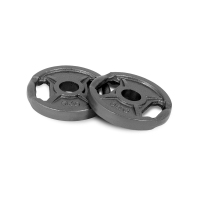
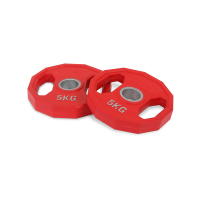
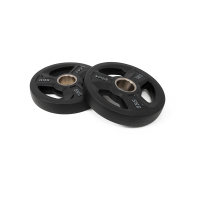
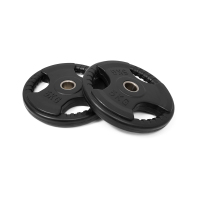
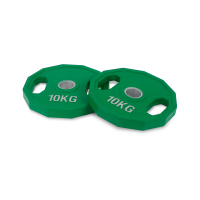
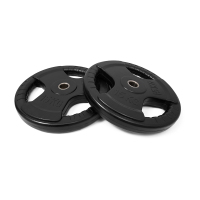
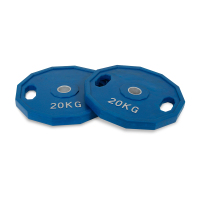
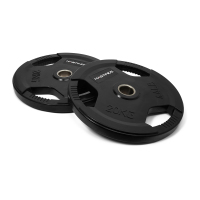
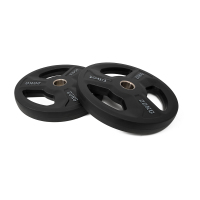
Olympic weight plates have 50 mm holes and fit Olympic bars with 50 mm sleeves. This system is widely used in gyms and home training spaces, including for heavy lifting when the equipment is rated for it. Options include cast iron, rubber-coated and tri-grip plates.
Olympic bumper plates with 50 mm holes
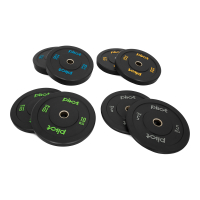
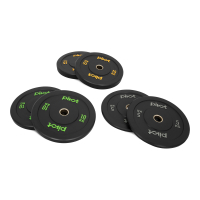
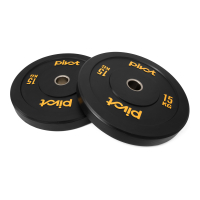
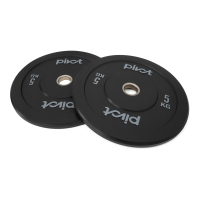
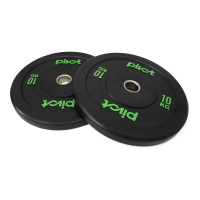
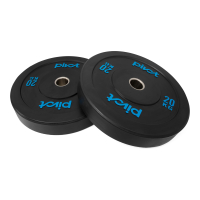
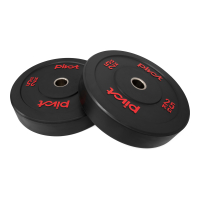
Bumper plates are rubber Olympic plates with 50 mm holes. Many are designed for weightlifting and exercises involving controlled drops. Only drop a loaded bar when the specific plates, bar and shock-absorbing floor are suitable. Follow the manufacturer’s restrictions, including any limits for lighter plates.
Cast iron or rubber-coated plates?
Cast iron plates are often compact and take up relatively little sleeve space. Rubber-coated plates have an outer layer that can reduce direct metal contact with the floor and noise during controlled placement. A rubber coating does not make a plate suitable for dropping. For this use, choose bumper plates explicitly designed for it and check the bar and floor too.
What are tri-grip plates?
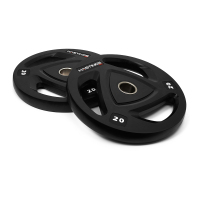
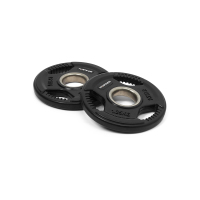
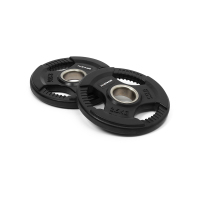
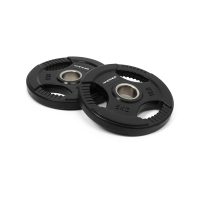
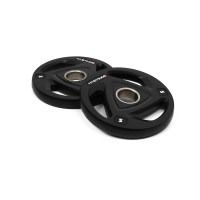
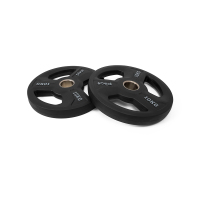
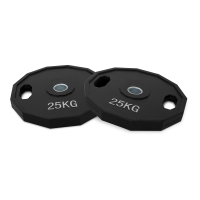
Tri-grip plates have integrated handholds that make them easier to lift, carry and load onto a bar. They are practical where weights are changed frequently. Some exercises can also be performed with a single plate, provided you can hold and control it securely.
Which weights should you choose?
Larger plates add load quickly, while smaller plates allow finer adjustments. A range of increments is useful for progressive strength training. Load both ends of a barbell equally and include the bar’s own weight when calculating the total.
What are microplates and technique plates?
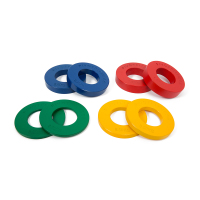
Microplates, or fractional plates, allow very small increases when a regular weight step is too large, for example during presses. Technique plates often combine a large outer diameter with a low weight, allowing you to practise lifts from the intended starting height. Check hole diameter and permitted use for both types; technique plates are not automatically suitable for dropping.
Individual plates or a complete barbell set?
Individual plates are useful for extending an existing collection or adding specific increments. If you need both a bar and plates, a complete barbell set may be more practical. It combines a bar with matching plates in the 30 mm system or the Olympic system with 50 mm plate holes.
Are plates sold individually or in sets?
This varies by product. Some are sold in pairs, while combination sets contain several weights. Check the product name and specifications for the number of plates supplied and whether the stated weight refers to one plate, a pair or the whole set.
Check capacity and loading space
Your available plates are only one limit on the training load. Check the capacity of the bar, bench and rack; a bench’s total capacity may include your body weight. Plate thickness and usable sleeve length determine how many plates fit. Leave enough room to secure suitable collars.
Using and storing weight plates
Secure the plates with matching collars and check that both sides are evenly loaded before each exercise. Keep loose plates out of walkways and do not lean them unstably against a wall. A weight plate storage rack keeps your space organised. Check that its holders fit 30 mm or 50 mm holes and that its capacity is sufficient.
Need a matching bar? Explore our barbells for standard plates with 30 mm holes and Olympic plates with 50 mm holes.
