
Barbell collars for 30 mm and 50 mm sleeves
Barbell collars help keep weight plates in position during training. They fit onto the bar’s loading sleeves, outside the plates, to limit movement during exercises such as squats, deadlifts and bench presses. Choose collars suited to your bar and the exercises you perform.
Our range includes collars for standard bars with 30 mm loading ends and Olympic bars with 50 mm sleeves, which accept plates with 50 mm holes. Compare spring collars, ring or screw collars and quick-release clamps. Check both the diameter and the type of fastening.
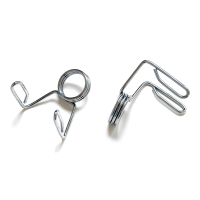
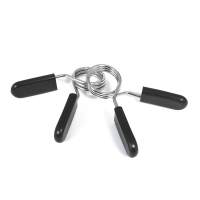
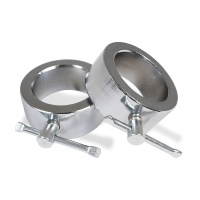
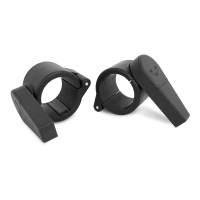
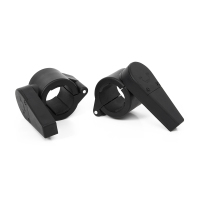
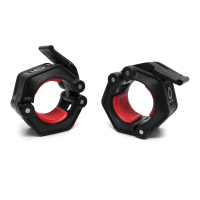
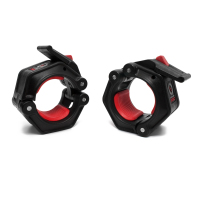
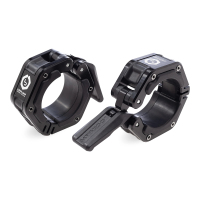
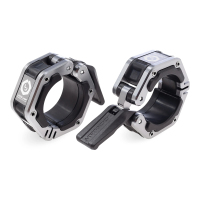
Types of barbell collars
Spring collars are squeezed open and slid onto a compatible smooth sleeve. Ring or screw collars vary by design: some clamp onto a smooth sleeve with a screw, while threaded collars screw onto matching threaded bar ends. Quick-release collars use a lever or clamping mechanism for convenient weight changes. Check the product’s fastening method rather than relying on its name alone.
30 mm and 50 mm compatibility
Measure the section of the bar that carries the plates, not the grip. Choose 30 mm collars for compatible 30 mm loading ends and 50 mm collars for compatible Olympic sleeves. Not every standard bar uses the same diameter. For threaded bars, the thread must also match; the stated diameter alone is not enough.
Changing weights during training
Quick-release clamps make repeated weight changes convenient. Place the bar securely on suitable supports or the floor before removing collars, keep the load balanced and close the collars fully after changing plates. For dynamic lifts or dropping, check that the specific collars, bar, plates and floor are designed for that use.
Using barbell collars
Before each set, check that the plates sit properly and that the collars are securely fastened against them according to the instructions. Inspect collars for wear, damage or reduced grip, and stop using any that no longer hold properly. Collars help secure the plates but do not replace suitable safety supports, a stable setup or correct technique.
