
Storage racks for weight plates
A weight plate rack keeps your plates organised and accessible. Explore plate trees, wall racks, bumper plate racks and mobile storage systems. Before buying, check suitability for standard plates with a 30 mm hole diameter or Olympic plates with a 50 mm hole diameter, as well as the available space and load capacity.



Why use a weight plate rack?
Loose plates take up floor space and can obstruct training. A dedicated rack lets you sort plates by weight and reach them easily. Suitable holders also help keep plates from tipping or rolling into the training area when stored as instructed.
Storage for 30 mm or 50 mm plates?
Compare the hole diameter of your plates with the storage peg diameter and the manufacturer’s compatibility information. A plate with a 30 mm hole will not fit a 50 mm peg. Olympic plates have a 50 mm hole diameter, but a rack may support more than one plate system if designed for it. Check the specified fit rather than relying on the rack’s name alone.
What is a plate tree?
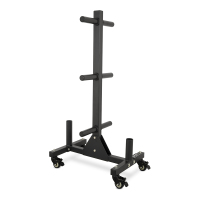
A plate tree is a freestanding rack with several horizontal storage pegs. It lets you organise plates at different heights by weight or size. Some models also include a barbell holder. Compare the number of pegs, usable length, clearance for large plates and both individual peg and total load limits.
Wall racks for weight plates
A wall rack frees up floor space and can be useful in a small home gym. The wall and fixings must support the combined weight of the rack and plates. Fit pegs at an accessible height and follow the manufacturer’s installation instructions for the relevant wall construction.
Storage for bumper plates
Some bumper plate racks hold plates upright in separate slots; others use pegs. In a slot rack, the Olympic plate’s 50 mm hole diameter does not determine fit because the plate is not slid onto a peg. Check slot width, plate thickness, outer diameter, total storage space and load capacity instead.
Fixed or mobile storage?
A fixed rack suits plates that stay in one training zone. A mobile rack can make repositioning easier, but only move it loaded if the manufacturer permits this. Check the rack and wheel load limits. Use a level, clear route, move slowly and apply wheel brakes when parked if fitted.
Racks for group fitness barbell sets
Dedicated racks can store several aerobic pump sets, including bars and matching plates. This is practical for group classes where equipment needs to be easy to access. Check the supported bar lengths, plate and holder diameters, component counts and capacity for the complete collection.
Which plate rack do you need?
Identify your plate hole diameters and measure plate thickness and outer diameter. Add up the total weight and compare it with the rack’s overall and individual storage-point limits. Thin cast-iron plates often use less storage length than thicker coated plates or bumper plates. Leave room for access and any future additions.
Storing plates securely
Place a freestanding rack on a level, stable surface and follow any anchoring instructions. Distribute weight evenly and keep heavier plates low where the design allows. Never exceed load limits, and use any specified peg retainers. Follow the movement instructions for mobile racks. Plates are included only when explicitly listed in the product description.
Explore our weight plates or browse all weight storage systems, including racks for dumbbells, barbells and kettlebells.
